Week 25, 2026
For a long time, I thought product management was a discipline about systems. Roadmaps. Prioritization. Shipping features. Moving metrics. And to be fair, it is all of that. But the more time I’ve spent building products, the more uncomfortable a realization has become: product management is far less about technology than we like to admit. It is psychology. It is about people. About behavior. About understanding why someone who says they want something… still doesn’t use it. Because products don’t win just because they are valuable. They win because that value is easy to access. That shift in thinking changed how I see every product I touch.
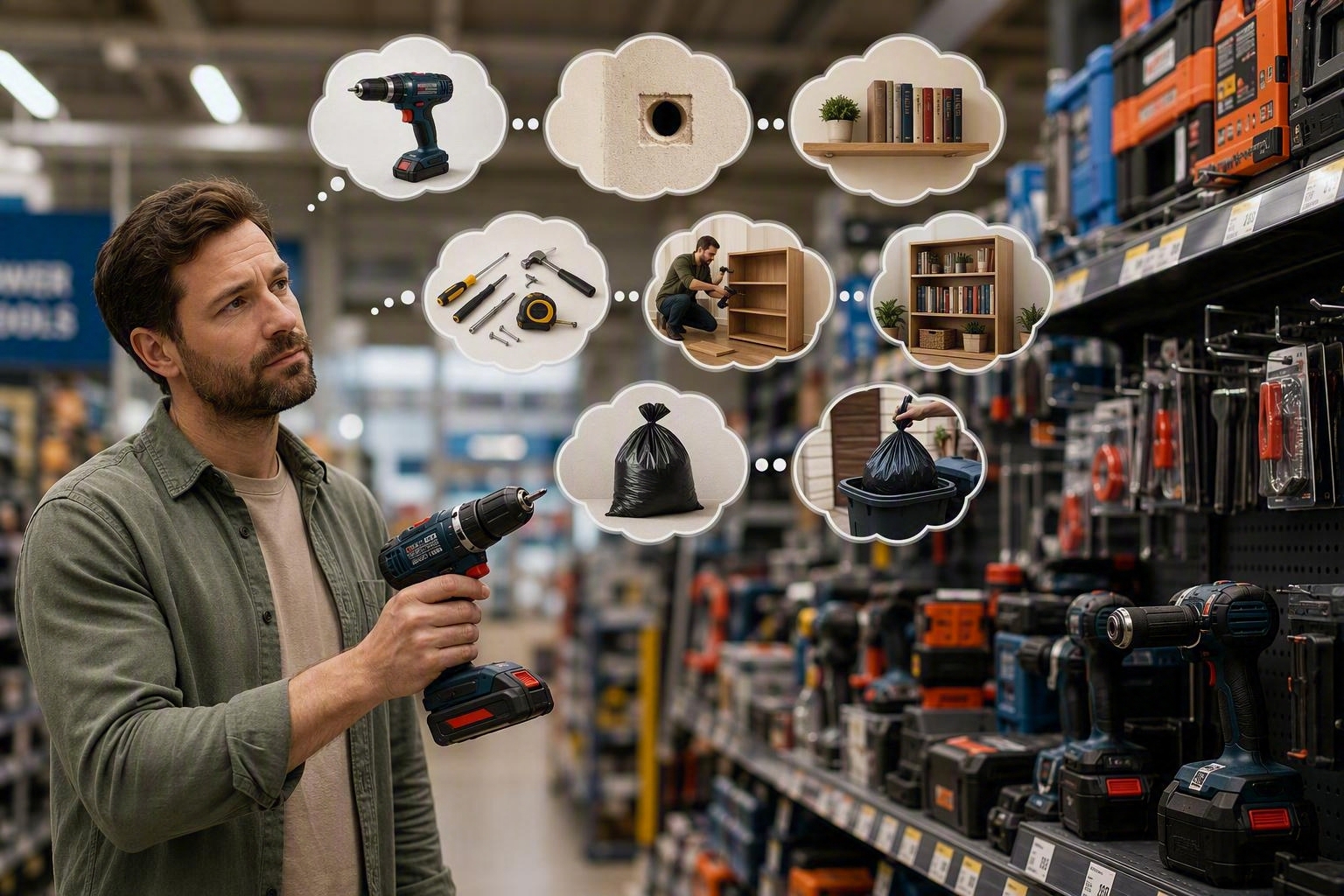
I started noticing something that didn’t quite make sense at first. Users consistently chose easier paths… even when better ones existed. They delayed decisions when flows became complex. They abandoned processes that asked for too much input. They accepted “good enough” outcomes when the alternative required effort. Imagine two products solving the same problem. One gives you the best possible result, but it takes multiple steps, choices, and time. The other delivers slightly less value, but it’s instant. Effortless. Predictable. Most people will choose the second. Not because it is objectively better. But because it is easier. That pattern is everywhere. One-click checkout vs filling out long forms. Using saved preferences vs starting from scratch. Accepting a default vs exploring alternatives. Quick booking vs endless comparisons. When value is close, convenience wins. When effort is high, value gets ignored. That’s when it clicked for me: effort is a hidden tax on every product. And most products quietly overcharge.
This is where the traditional, technical view of product management breaks down. We tend to focus on building more value. More features. More capability. More options. But product management is not about maximizing value in theory. It is about making value accessible in practice. That’s a very different problem. Value gets you interest. Convenience gets you action. And the gap between those two is where most products fail. Weak product thinking assumes that value alone is enough. It overestimates user motivation. It designs for ideal behavior. It expects users to invest effort. Strong product thinking does the opposite. It protects and clarifies the value, then aggressively reduces the effort required to reach it. It simplifies decisions. It removes steps. It designs the shortest possible path from intent to outcome. Because users don’t avoid value. They avoid effort.
What surprised me most is how small decisions shape behavior in outsized ways. Removing one step from a flow. Pre-selecting a sensible default. Making an action obvious instead of optional. These changes feel minor in isolation, but their impact is disproportionate. Because small reductions in effort unlock existing value. You’re not creating something new. You’re enabling something that was already there to actually be experienced. And this is also where the uncomfortable truth sits: even high-value products fail if they require too much effort. That’s hard to accept as a Product Manager. You realize your best ideas won’t survive friction. You realize users will not “work” for your product. And that’s not a failure of the user. It’s a signal for us. That is where real product leverage exists. Good products create value. Great products make it effortless to access.
So how do we act on this? First, validate that real value exists. No amount of convenience fixes a product that doesn’t matter. But once value is there, the real work begins. Reduce effort at every step. Remove unnecessary decisions. Simplify flows aggressively. Test faster and easier paths, not just better ones. Observe where users hesitate, not just where they succeed. Optimize relentlessly for time to value. Because convenience does not replace value. It unlocks it. Product maturity is not about having the most features or the most capability. It is about how easily users can access and realize the value you’ve built. And that is where Product Managers have the greatest opportunity not just to ship products, but to shape behavior. To make the right action the easy one. Because in the end, value is only real when users experience it. And they only experience it when it is easy to access.
DISCLAIMER: This post reflects my personal views and experiences as a product manager. It does not represent the views, strategies, or opinions of my employer or any organization I am affiliated with.