Week 36, 2026
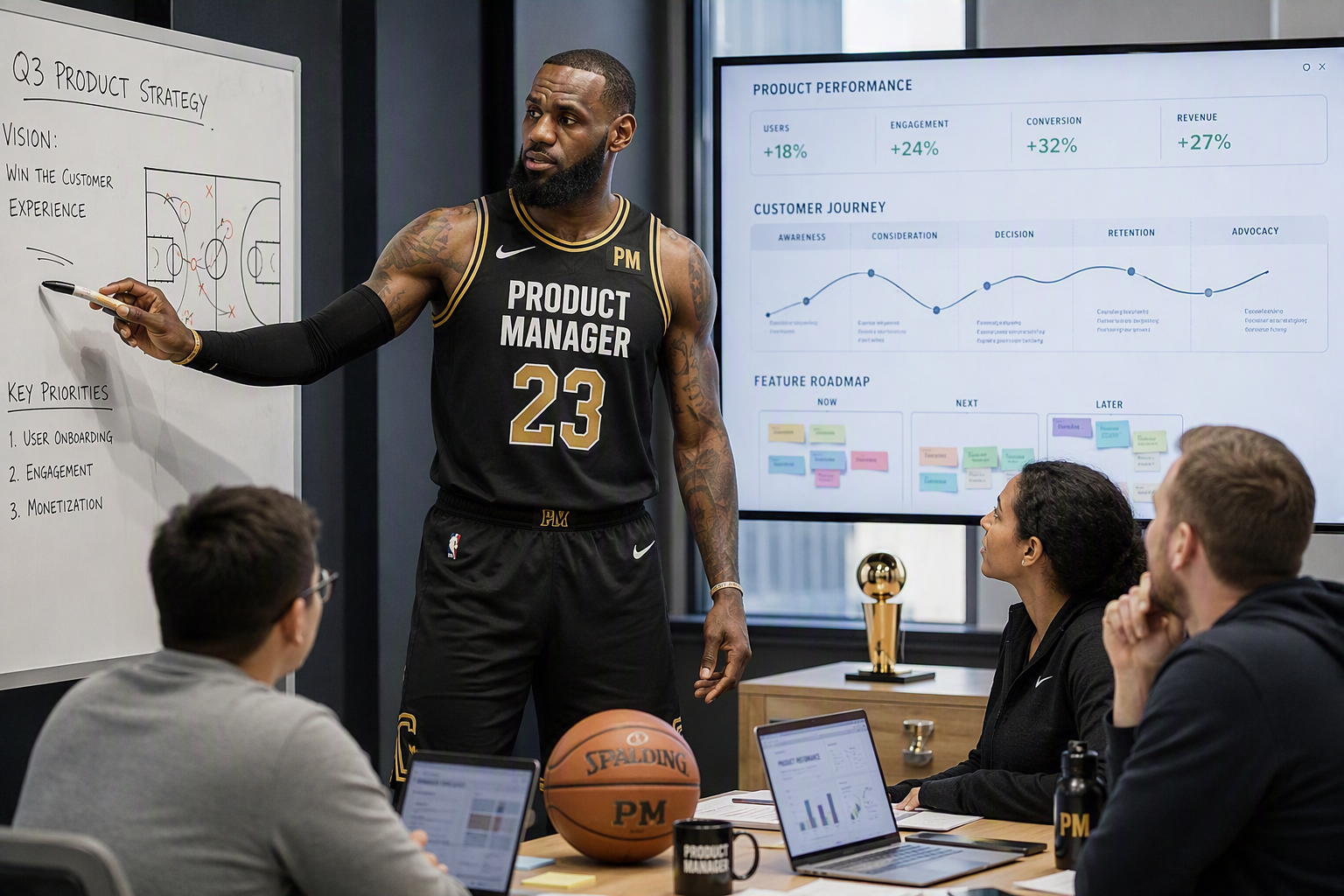
Last month I was presenting a product update to a group of leaders. I had done this countless times before. The slides were ready. The demo environment was open. The story made sense. The customer problem was clear. As I started walking through the experience, people nodded along. A few took notes. Someone asked a question about adoption. Someone else asked about differentiation. I answered both confidently. At least I hope I looked confident. Because while I was discussing strategy and customer value, a completely different conversation was happening in my head. “Please work. Please work. Please work.”
Every Product Manager has had that demo. The one where you’re presenting calmly while mentally tracking every possible disaster scenario. I knew exactly which button could break everything. I knew there was a bug sitting in an edge case we hadn’t fully solved yet. I knew a small change had gone in only days earlier. I knew there were assumptions we still needed to validate with customers. Nobody else in the room was thinking about those things. They were watching a demo. I was watching a hundred decisions, trade-offs, and risks trying to behave themselves for thirty minutes. The audience saw confidence. I saw risk. Leadership saw a product. I saw uncertainty.
And the funny part is that if you asked people afterward how the meeting went, they probably would have said I seemed completely comfortable. That’s the strange thing about Product Management. People often assume we’re confident because we know the answers. The longer I’ve done this job, the more I’ve realized that’s usually the opposite of what’s actually happening.
I think the perception exists because Product Managers are frequently the people standing in front of the room. We’re the ones presenting roadmaps, explaining priorities, introducing new concepts, and answering questions about where a product is heading. It creates the impression that we know more than everyone else. That we can see around corners. That we fully understand what customers want. That we have a gift to predict the future.
Most PMs know that’s not how it feels from the inside. A few days before that demo, I had customer feedback pulling me in three different directions. One customer loved the experience. Another thought it was unnecessary. A third wanted something completely different. The data supported part of our thinking but not all of it. Stakeholders mostly agreed, but not entirely. Engineering had identified risks. Design wanted additional refinement. The roadmap looked clean on a slide. Reality looked far messier.
That’s one of the least discussed parts of Product Management. Most Product Managers are less certain than they appear. We cannot predict the future. We just can reduce uncertainty about the future. We spend a lot of time working with partial information, conflicting signals, unanswered questions, and educated guesses. The most important decisions are often made without perfect information. Not because we enjoy uncertainty, but because waiting for certainty would mean never shipping anything.
Looking back, some of the products I’ve been most excited about started as rough ideas that felt almost embarrassingly incomplete. Some of the ideas I thought were guaranteed successes struggled to gain traction. Product work has a way of humbling you. The longer you spend in it, the more aware you become of how much you don’t know.
That’s why demos feel different when you’re the person closest to the work. The customer only sees what works. The Product Manager sees everything that could break. During that presentation, people saw a polished experience. I saw the unfinished workflows we intentionally left out. They saw a smooth journey. I saw dependencies. They saw confidence. I saw open questions. The product worked. Mostly. The demo looked smooth. Reality was messier.
At one point someone asked whether we were confident customers would adopt the experience. I answered yes. And I genuinely believed that. But if I’m being honest, my confidence wasn’t based on certainty. It was based on probability. We’d gathered evidence. We’d tested assumptions. We’d spoken to customers. We’d looked at signals. We had reasons to believe we were heading in the right direction. But there was still uncertainty because there is always uncertainty.
A lot of aspiring Product Managers imagine there comes a point in your career where suddenly you know exactly what will happen. I’m not sure that moment exists. If anything, the opposite happens. The more experience you gain, the more aware you become of what could go wrong. You recognize the edge cases. You understand the risks. You remember previous launches that behaved unexpectedly. Experience doesn’t eliminate uncertainty. It simply gives you a better relationship with it. Every Product Manager has had that demo where everything looked under control externally and felt much less predictable internally.
So, great Product Managers do not predict the future. They reduce uncertainty about the future. Contrary to popular belief, a PM’s role is not to know exactly what customers want, define the perfect solution upfront, or create a roadmap that reality will follow. Instead, Product Managers understand customer problems, form hypotheses, test them through experiments, and continuously refine strategy based on evidence. Strategy defines where to play and what outcomes matter, while experimentation determines whether the underlying assumptions are actually true. Validated hypotheses strengthen strategy; invalidated hypotheses improve it. In the end, the best PMs are not fortune tellers. They are professional uncertainty reducers who turn assumptions into knowledge through continuous learning.
Early in my career, I treated MVPs like smaller versions of finished products. I wanted them polished. I wanted them complete. I wanted every experience to feel production ready. Over time I realized I was missing the point. An MVP is supposed to look unfinished. We weren’t proving perfection. We were proving potential. Some of the most valuable product work I’ve ever been part of involved something rough, imperfect, and incomplete. Not because quality didn’t matter, but because learning mattered more. The goal wasn’t perfection. The goal was learning. The product doesn’t need to be perfect. It needs to teach us something.
That’s what good MVPs do. They validate assumptions. They reveal risks. They expose flaws in our thinking while the cost of change is still low. In hindsight, many of my mistakes came from wanting certainty before acting. Wanting more data. More validation. More answers. The stronger Product Managers I’ve worked with behaved differently. They tested assumptions earlier. They shared unfinished ideas. They acknowledged uncertainty openly. They moved forward knowing they would probably need to adjust later.
They as well understood something I learned much more slowly: confidence is not certainty. Good Product Managers learn to operate in ambiguity. Not because ambiguity is enjoyable, but because product development rarely offers anything else.
Most people assume Product Managers are confident because they have all the answers. I’ve learned the opposite is usually true. The longer I’ve worked in product, the more I’ve realized that confidence rarely comes from certainty. It comes from experience navigating uncertainty. Every Product Manager has had the demo where they’re smiling confidently while silently hoping everything works exactly as expected. The audience sees confidence. The Product Manager sees assumptions, trade-offs, risks, dependencies, and unanswered questions.
That’s not a weakness of the profession. It’s the reality of building products. The best Product Managers don’t succeed because they know everything. They succeed because they’re willing to move forward when they don’t. Looking back at that demo, I don’t remember the slides or the questions nearly as much as I remember that internal voice repeating, “Please work. Please work. Please work.” Because hidden inside that moment is a reality most PMs quietly recognize. Product Management is not really about having all the answers. It’s about helping teams make progress when answers don’t exist yet. Building products requires confidence. But product management requires something even harder: learning how to be comfortable with uncertainty. And that’s a lesson almost every experienced Product Manager eventually learns.
This newsletter reflects my personal views and experiences as a product manager. It does not represent the views, strategies, or opinions of my employer or any organization I am affiliated with.